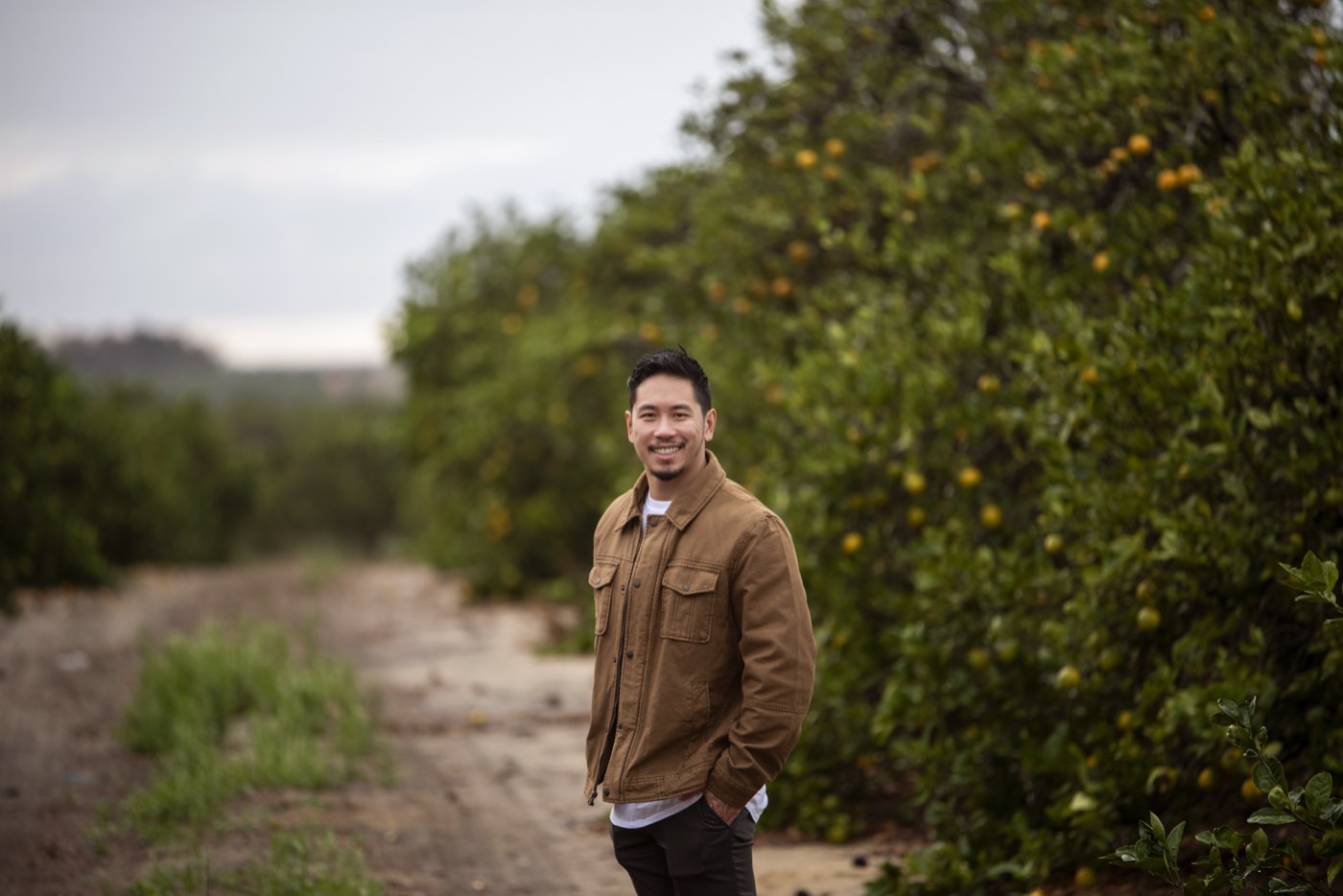
Hi, I'm Shane Tjin, a massage therapist in training and an NASM-certified personal trainer based in the San Francisco Bay Area.
Movement has been the throughline of my life for more than 25 years: bodybuilding, mobility, and a long curiosity about how bodies adapt to the way we live in them. For years that took the shape of coaching corrective exercise, learning to read how people actually move.
Five years ago I began assisting Janet Stone, whose teaching opened me to bhakti yoga and the craft of attuned, hands-on assisting. It was a completely different way of relating to a body in motion, and it's what first pulled me toward bodywork. When Janet invited me to assist at Esalen, I found my way into the Esalen massage style, and this has been my path ever since.
All of that training stays with me when my hands are on you. I'm not just hunting tight spots. I'm watching how your body holds itself, where it pulls, what it's protecting.
The brand takes its name from the Pacific coast for a reason: the cliffs of Big Sur, the headlands, the quiet of Esalen itself. That's the energy I try to bring into every session.
So whether you're recovering from training, carrying chronic desk tension, or you just need to come down from the noise of your week, you're welcome here.
A short look from the practice.
"Bodywork starts with permission to slow down, to feel, to soften."
What I draw from
Swedish is what most people picture when they hear "massage." Long, gliding strokes, gentle kneading, and a steady, unhurried pace. It works the surface layers to ease tension, move blood and lymph, and quiet the part of your nervous system that's been running too hot.
I think of it as the gentlest doorway into bodywork. It's right for first-time clients, for anyone coming off a long stressful stretch, and honestly for most bodies on most days. Pressure stays in the light-to-medium range.
If you've never had a massage before, I usually start people here.
Esalen massage was developed at the Esalen Institute on the Big Sur coast in the 1960s and 70s, in a community of bodyworkers and somatic teachers who wanted bodywork to feel like more than mechanics. It's not really about fixing anything.
The strokes are long, oil-rich, and flowing. My hands travel from one end of the body to the other in unbroken sweeps, at a steady, meditative pace. You don't feel a series of techniques being applied to you. You feel one continuous experience of being held and integrated, head to toe.
This is the modality people reach for when they need to be received rather than worked on. It's deeply restful, often emotionally settling, and it pairs beautifully with whatever else your body needs that day.
Fascia is the connective tissue web that wraps every muscle, bone, and organ in your body. When it gets stuck, whether from injury, repetitive motion, or years of holding the same patterns, it pulls on everything it touches. Stretching alone often won't fix that.
Myofascial release uses slow, sustained pressure on those restrictions, usually with little to no oil so my hands can actually grip the tissue and lengthen it directly. The release tends to feel different from regular massage. Less like kneading, more like a slow melt.
This is what I reach for when something keeps coming back. Recurring shoulder tension. Posture-related pain. Range of motion that won't budge with stretching.
Deep tissue reaches the layers underneath the surface ones. The strokes are slower, the pressure sustained, the patience much higher. Tightness that's been sitting in one place for a long time needs that kind of time to actually let go.
This is the right call when lighter work hasn't done it. Athletes coming off heavy training, desk-bound bodies carrying months of accumulated tension, that one spot in your trap or hip that always seems to come back. I'll use forearms, elbows, and knuckles to apply real pressure, but I never confuse firm with harsh.
We talk through pressure as we go. The goal is what your body welcomes, not what it can endure.
Lymphatic drainage is one of the lightest, most precise forms of bodywork I offer. Instead of pressing into muscle, the strokes are slow, rhythmic, and very gentle, working with the lymphatic system that sits just below the skin. Pressure is so light it can surprise people the first time. That's the point. The lymph vessels are tiny and shallow, and they respond best to a delicate, repeated rhythm.
It's the right call after surgery, after illness, during periods of swelling or fluid retention, and any time your immune system needs a gentle assist. It also pairs beautifully with chronic conditions where deeper work would be too much.
If you're looking for the kind of bodywork that doesn't feel like work at all, this is it. Many people fall asleep within the first ten minutes.
Committed to evidence-based practice
National Academy of Sports Medicine
Issued Dec 2023
National Academy of Sports Medicine
Issued Mar 2026
Specializing in Swedish, Myofascial Release, Esalen & Deep Tissue
Currently in training
A few things people often want to know before their first session
I work in the San Francisco Bay Area. Once you book, you'll receive the exact address and any parking notes in your confirmation email.
Many clients undress completely, and that's totally normal — it lets the work flow without interruption. Otherwise, just undress to your level of comfort. Either way, you're professionally draped at all times and only the area being worked on is uncovered. You'll have privacy to change before and after, and you can ask for more or less of anything mid-session. Come hydrated and try to avoid heavy meals in the hour beforehand.
We start with a short check-in — what's been bothering you, where you want focus, what pressure feels right. From there I blend modalities (Swedish, deep tissue, Esalen, myofascial release, lymphatic drainage) into one continuous session tailored to your body that day. You're always free to ask for more or less pressure, longer time in one area, or anything else mid-session.
24 hours' notice for cancellations and reschedules. Late cancellations (under 24 hours) are billed at 50% of the session fee; no-shows are billed in full. Life happens — genuine emergencies are handled case by case.
Not currently. Payment is collected after each session via card or Venmo (@shanetjin).
Often yes, but please tell me up front so we can adapt. A few conditions need medical clearance, and there are some I'll respectfully refer out (active fever, contagious skin conditions, very early postpartum, blood clots, advanced cardiovascular disease). The intake form before your first visit covers this in full.
Tipping is appreciated but never expected. The session price is the full price — no obligation. If you'd like to leave one, my Venmo is @shanetjin.
Book a 75- or 90-minute session — pay after your appointment.